

Everything you need to know about data collection

Everything you need to know about data collection

The data collection landscape is undergoing a profound transformation. In July 2024, Google announced that it would maintain third-party cookies in Chrome, offering the possibility of managing their activation. After several years of uncertainty about their removal, this decision reaffirms the importance of adopting data collection strategies that are aligned with user expectations.

Why collect data? Let’s delve into the heart of zero-party and first-party data to decipher these concepts, understand current developments and identify opportunities for your marketing strategies.

Why collect data and what exactly is involved?

First of all, it’s important to understand the context and the terms used. So we’re going to introduce you to those rather barbaric terms zero, first and third party data.

What are zero-party first-party data?

Zero-party data
Zero party data is considered to be the Holy Grail for any business!
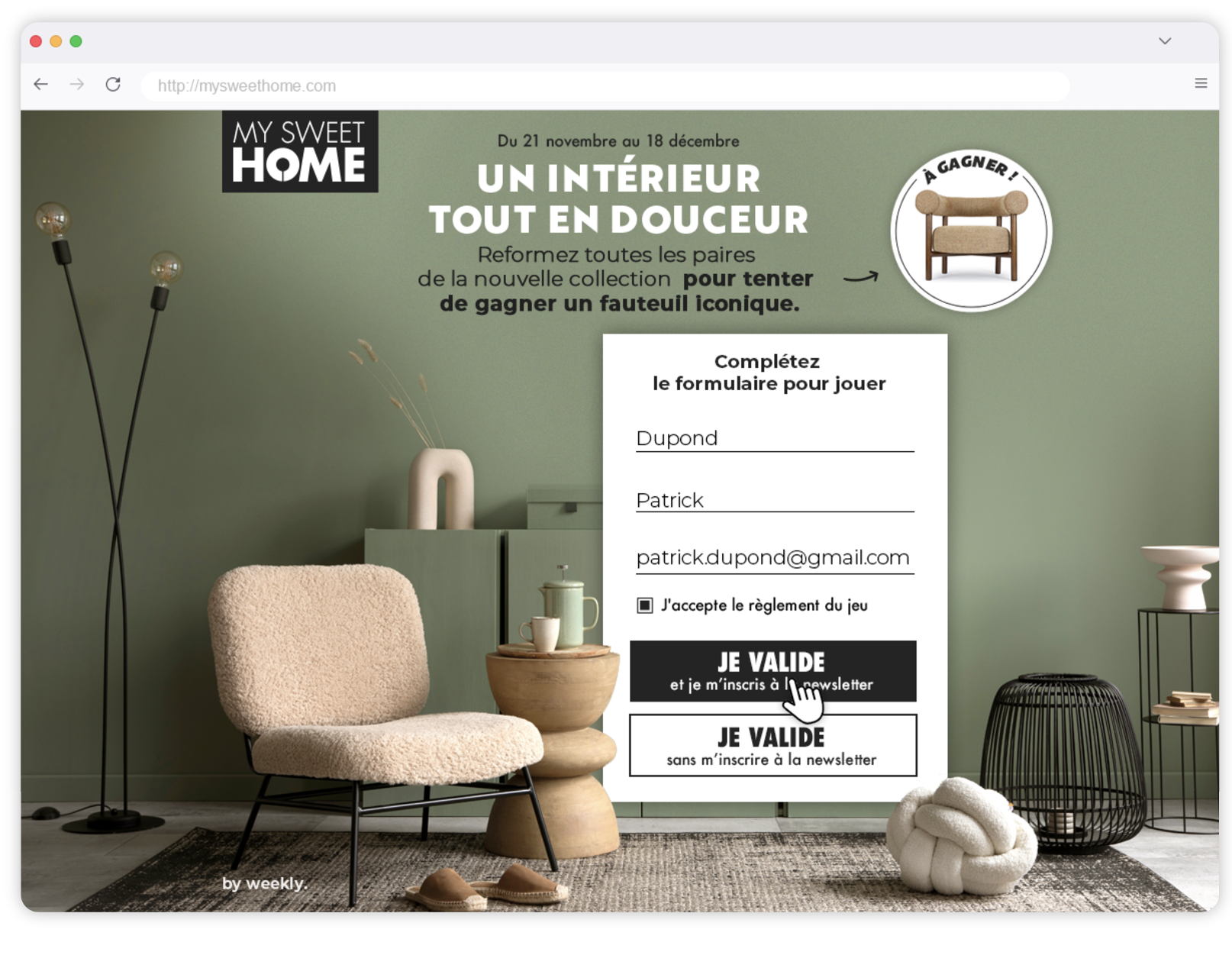
And why is that? Because it’s data that users voluntarily provide to the company. It is valuable because it is considered to be accurate and reliable. It can include user preferences, interests and demographic data. Surveys, polls and competitions are the best ways to collect this data.

First-party data
First party data is collected via a company website. It cannot be accessed outside this context and is collected securely. This data is used to improve the user experience or to target advertising. It may contain several types of information (name, email address, telephone number, shopping list or information relating to visits to a site). It is collected when a customer account is created or when a conversion pixel is installed on the website.

Second-party data
Second-party data is collected via a third party. The third party holds the data on a first-party basis, i.e. on its own site. It is therefore an exchange between two companies, with no intermediary.

And what about third-party data?

“Hi, it’s us cookies!”

Third-party data
Or third-party cookiesare data collected by intermediaries on the site visited. This data is collected from domains other than that of the site visited. Unlike second-party data, which we briefly discussed above, this data is generally managed by third parties.
Third-party cookies record browsing habits, the sites visited or the keywords searched and are used for advertising.

By the way, why are you suddenly hearing about these third-party cookies? As it happens, the impact on users’ privacy has been the subject of much debate recently. Critics accuse these uses of data collection without the consent of users. Which is an alarming subject, needless to say.

Faced with these concerns, many browsers have decided to limit third-party cookies. This is the case with Firefox and Safari. New regulations, such as the RGPD in Europe, have been put in place to ensure that users are better informed about this rather unusual data collection.

So, in order to respect the privacy of their users, many advertisers have started to turn to other types of data. Like the first-party and zero-party data you are now familiar with, which are less intrusive (while offering more qualified advertising targeting).

collection methods
collection methods

What are the developments and how to anticipate them?

Learning to adapt to the changing data environment

The question of the disappearance of third-party cookies is not new. Let’s just say that it was highlighted by Google’s latest intervention on the subject. A number of browsers such as Safari, Firefox and Tor have already taken the plunge. Google, for its part, has chosen to maintain third-party cookies in Chrome, allowing users to decide whether or not to activate them.

However, it remains vital to look at other types of data in addition to third-party cookers in order to compensate for data depreciation.

Conquering zero party data

Remember. At the beginning of this article, we talked about a type of data that is considered to be the Holy Grail for any company! If you’re going to change your data collection strategy, why not opt for the most advantageaous model?

So it’s zero-party data that we recommend you focus on.

This strategy is above all based on contract of trust between a company and its customers. And to establish this trust, brands seek to interact intelligently with their customers. In the current climate of tension surrounding data collection, it is important for companies to reassure customers while continuing to gather valuable information.

As a reminder, zero-party data is advantageous because it allows consumers to provide their data on a completely voluntary basis. When it comes to capturing purchasing intentions or customer preferences, this type of data collection represents the future of digital marketing.

But engaging your audience in this way is not so simple.

In addition to the trust placed in the brand, users also need to make the most of this exchange of good practices.

Here, the choice of the word game is particularly appropriate. An interactive format will tend to increase the time spent with the brand as well as brand recall. What’s more, if the brand offers a real interest in interacting with it -with an endowment for example- this will naturally increase the attachment and trust that users have in the brand.

Data zero-party, solutions for engaging your audience following data collection

Now you know all about good practice in data collection. It’s now time to look at the practical solutions available to you for putting in place a data collection strategy in line with your users’ interests.

Interactive campaigns: the ideal solution for generating qualified leads?

The timeless interactive mechanics can be used to meet objectives of engagement and lead qualification. Here, the idea is to spend time with your audience and give them a voice to capture thier buying intent.
customizer data collection

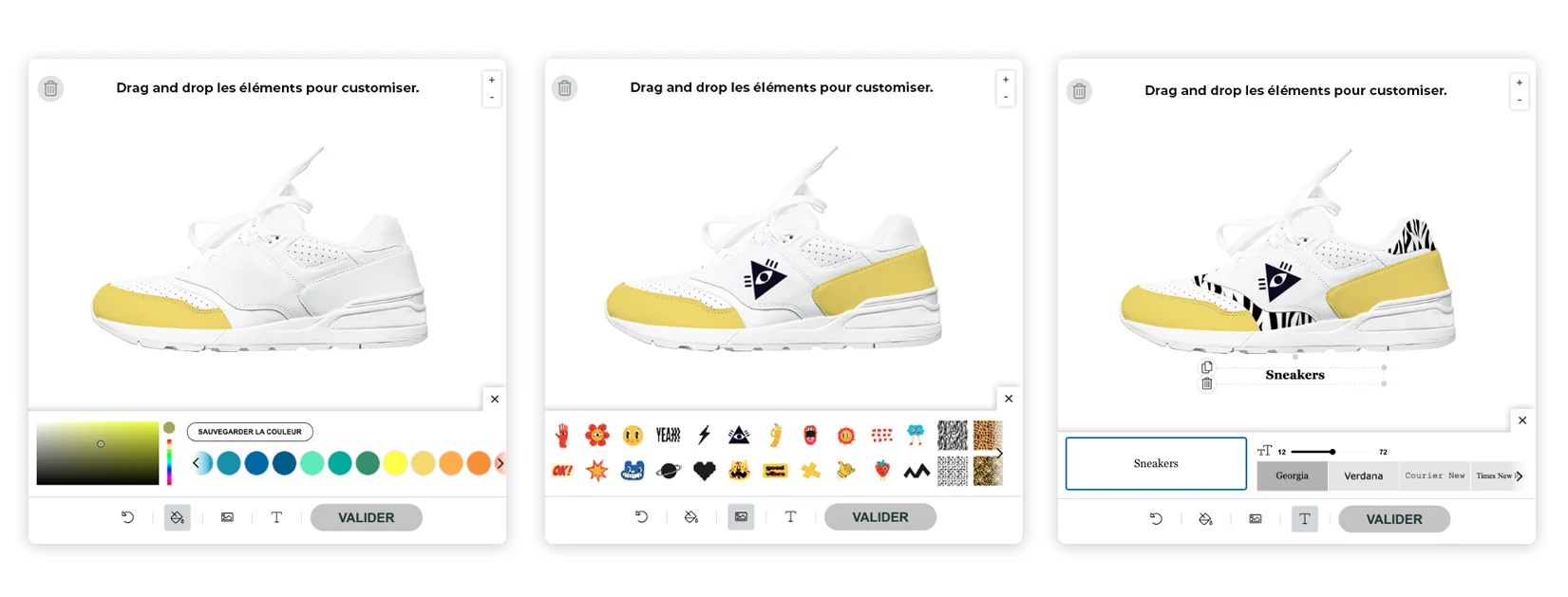
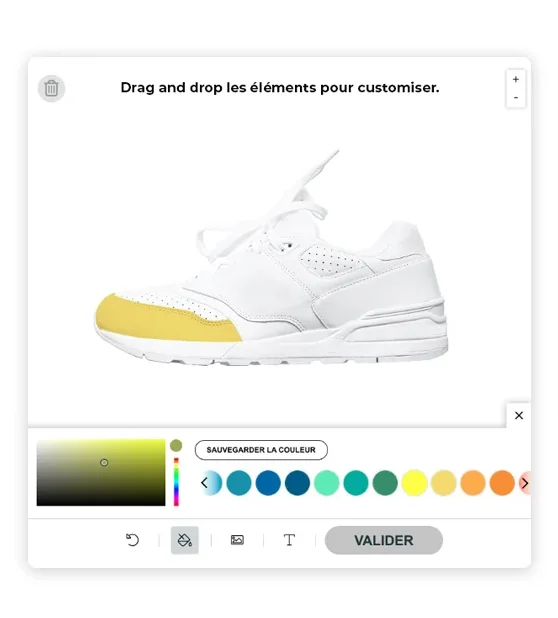
Customizable is the word that best describes the Customizer mechanism. It is its main asset. In this example, we chose to customize a shoe, but it could have been a completely different product. In the end, in this strategy, the product doesn’t matter, it’s the potential for customisation that interests us.

Offering users the chance to choose the style of the next flagship product in a collection is extremely engaging and offers several avenues for collecting behavioural data:

  • customer knowledge (campaign registration form)
  • product preference
  • user preference

The customisable form can be used to collect qualified data and the selected mechanics.

Say goodbye to traditional display and hello to interactive display to engage your audience

Interacting with your audience using interactive display means that you ensure that your brand is promoted and remembered.These are the key-words of this atypical model, which above all keeps its promises: engage and stand out.
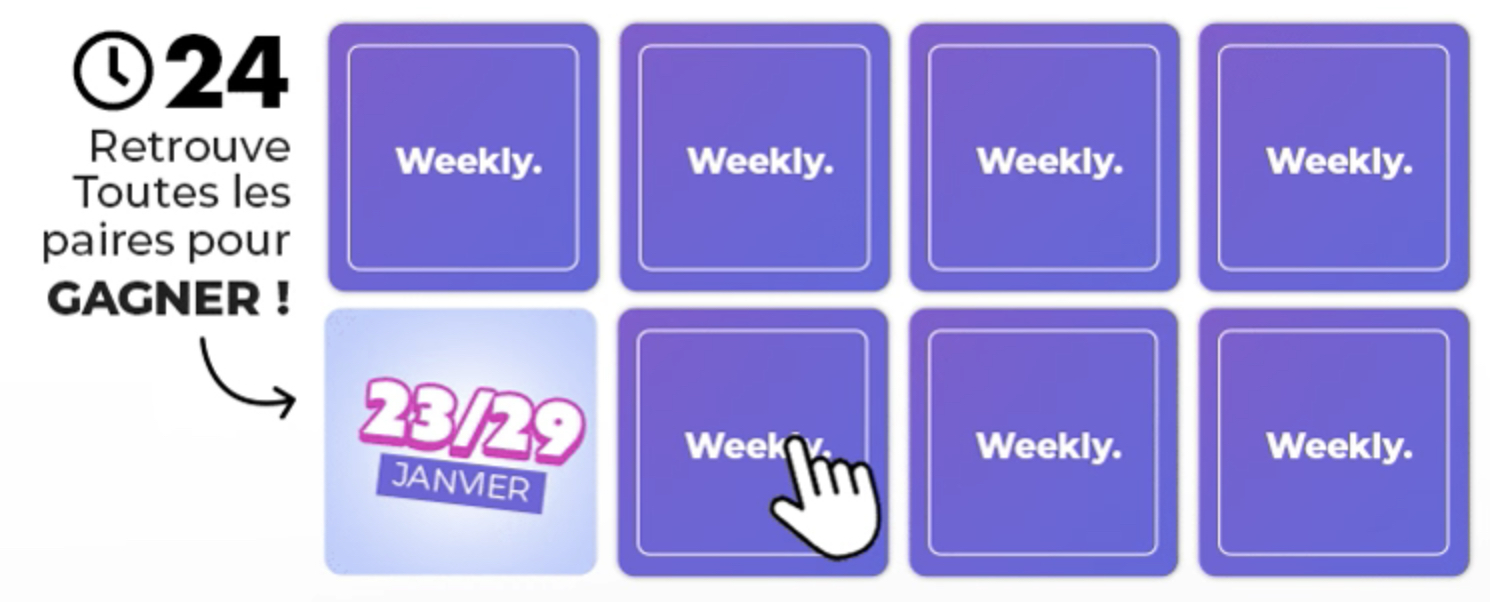
Playable ads memory

In this example, the Memory mechanic encourages the user to discover the cards in less than 30 seconds. The very principle of the game is to memorise the cards. This makes it easier to pass on important information. at the end of the game, a redirection completes the fun.

Conclusion

Finally, it is understood that the data collection strategy model is changing. The important thing is to anticipate these changes. By opting for the model that is most advantageous for you, but also and above all for your users. Zero party data collection is seen as the most promising solution. Because it is above all a contract of trust between a company and its customers.

Although Google has decided to maintain third-party cookies, it is essential for advertisers to continue to explore alternatives such as zero-party data and to adopt solutions that comply with current regulations, in order to respect users’ privacy and prepare for any future changes.
Let users have their say, and capture purchasing intentions and customer preferences so you can get to know them better!

In 30 minutes, we show you how data collection can revolutionise your marketing strategy

5 methods for collecting qualitative data

5 methods for collecting qualitative data

To engage and convert prospects into customers more easily, brands need to know their audiences. This is known as customer knowledge, and involves gathering relevant, accurate and up-to-date information about their profile, expectations and habits. This data enables brands to :

  • Create products or services that meet real demand;
  • Communicate on the marketing channels their customers already use with content that resonates with them;
  • Offer a smoother, more enjoyable shopping experience;
  • Imagining and creating contact points to extend the customer relationship and build consumer loyalty.

The crux of the matter is data collection. This is invaluable information about who customers are and what they want. With the announced end of third-party cookies, brands need to come up with data collection methods that are both effective and non-intrusive.

What are the most effective techniques for collecting qualitative data? In this article, we present 5 tools for collecting data.

collection methods

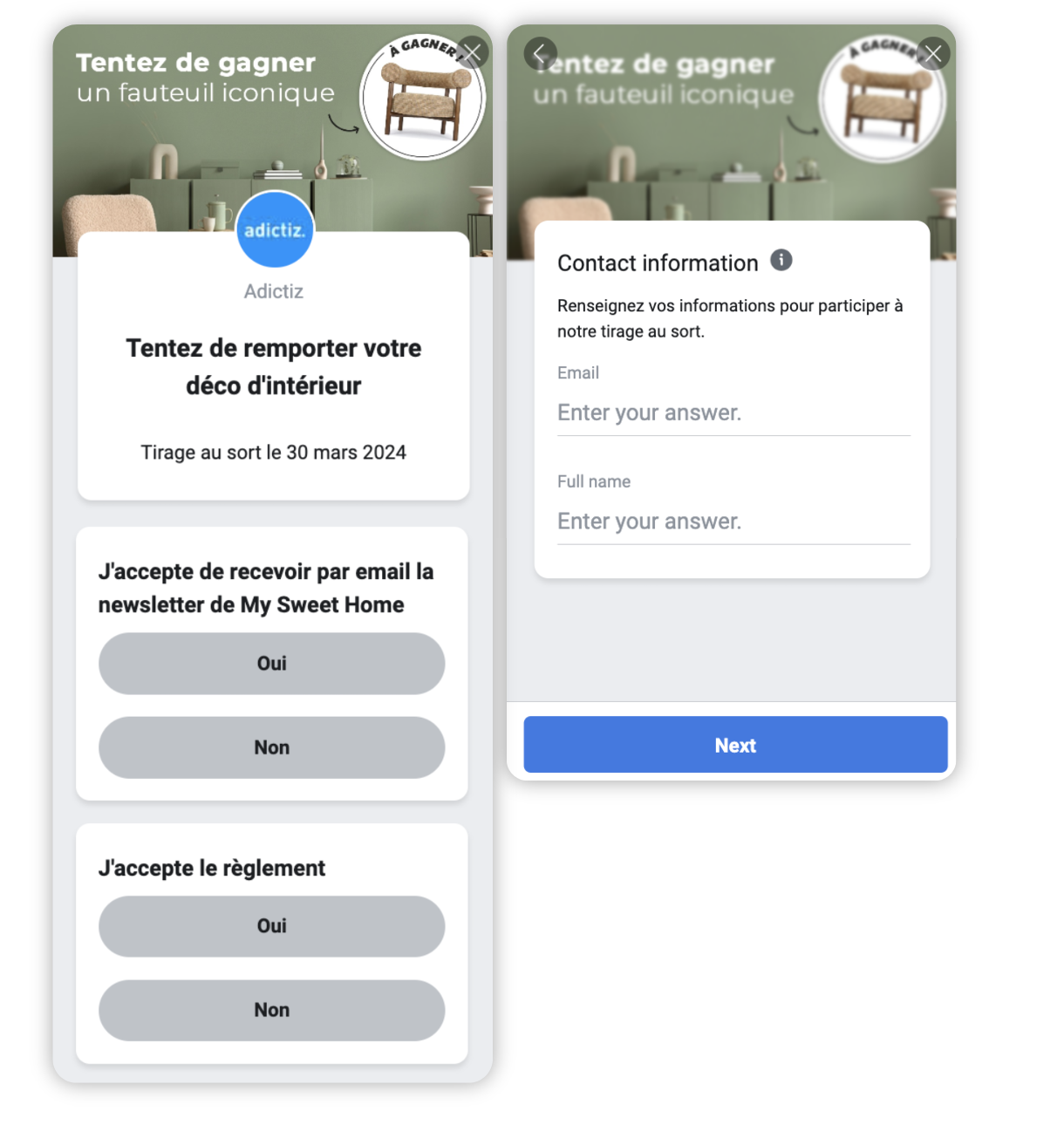
1. The marketing game as a data collection method

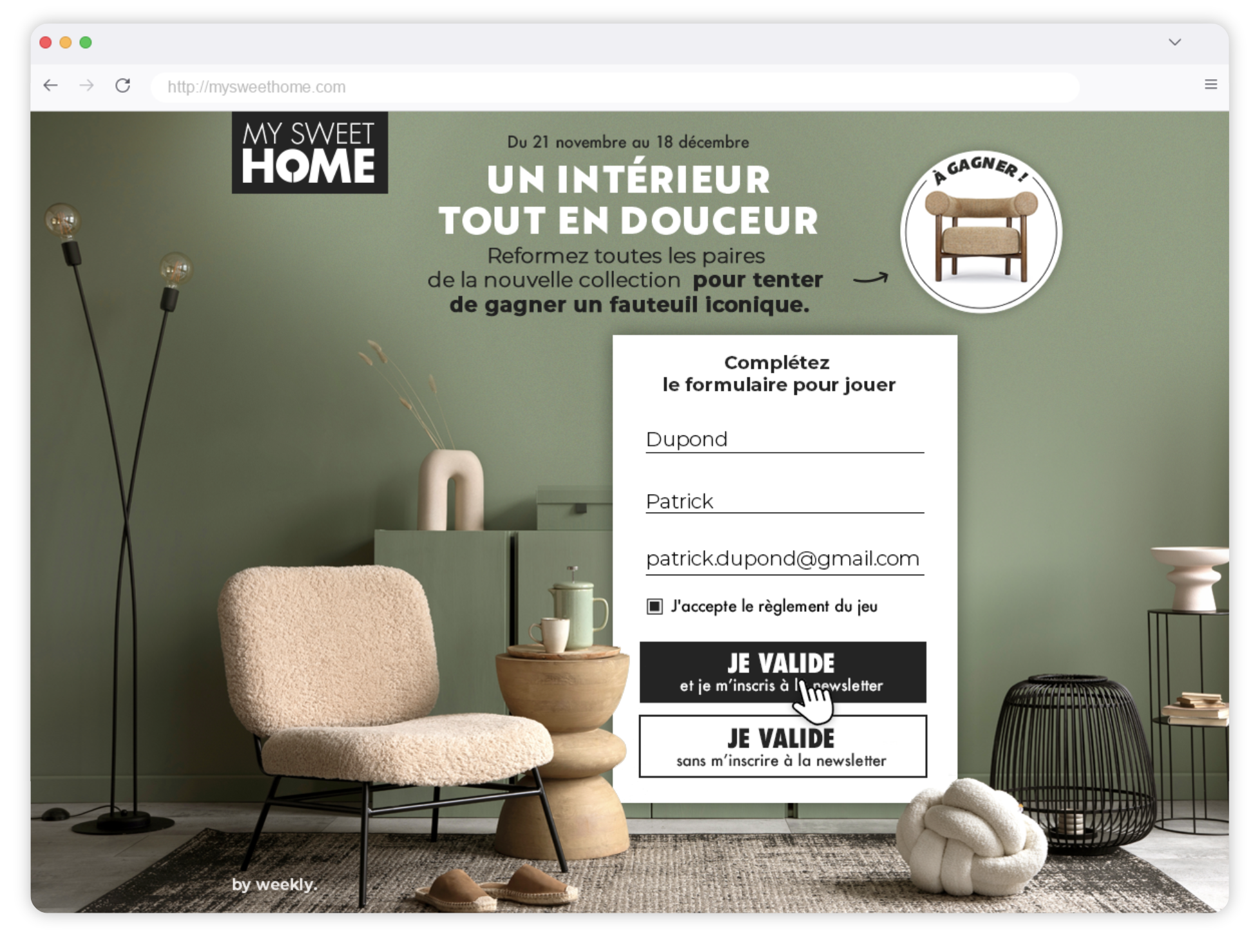
Fun and interactive, marketing games are an excellent way of collecting data. Not only does the prospect of winning a prize help to attract prospects and engage them, but the game itself incorporates data collection mechanisms (via interactions as in Swiper or Customizer ). La marque peu également intégrer un formulaire de collecte plus classique de type formulaire en début (pour accéder) et en fin d’expérience (avant de recevoir le gain). Ce second formulaire est dédié à la qualification des participants.

Why use it: to recruit, engage and convert prospects and customers by creating memorable brand experiences.

When to use it : at every stage of the customer journey. One example might be the distribution of an instant win via the brand’s website or social networks to generate new leads.

How to use it: game marketing works as long as the form or the method of collecting zero-party data (via interactions) is in harmony with the game experience.. Les prospects et clients seront également plus enclins à partager des informations si la marque leur propose de remporter une dotation attractive.

Weekly - collection methods

2. The form lead

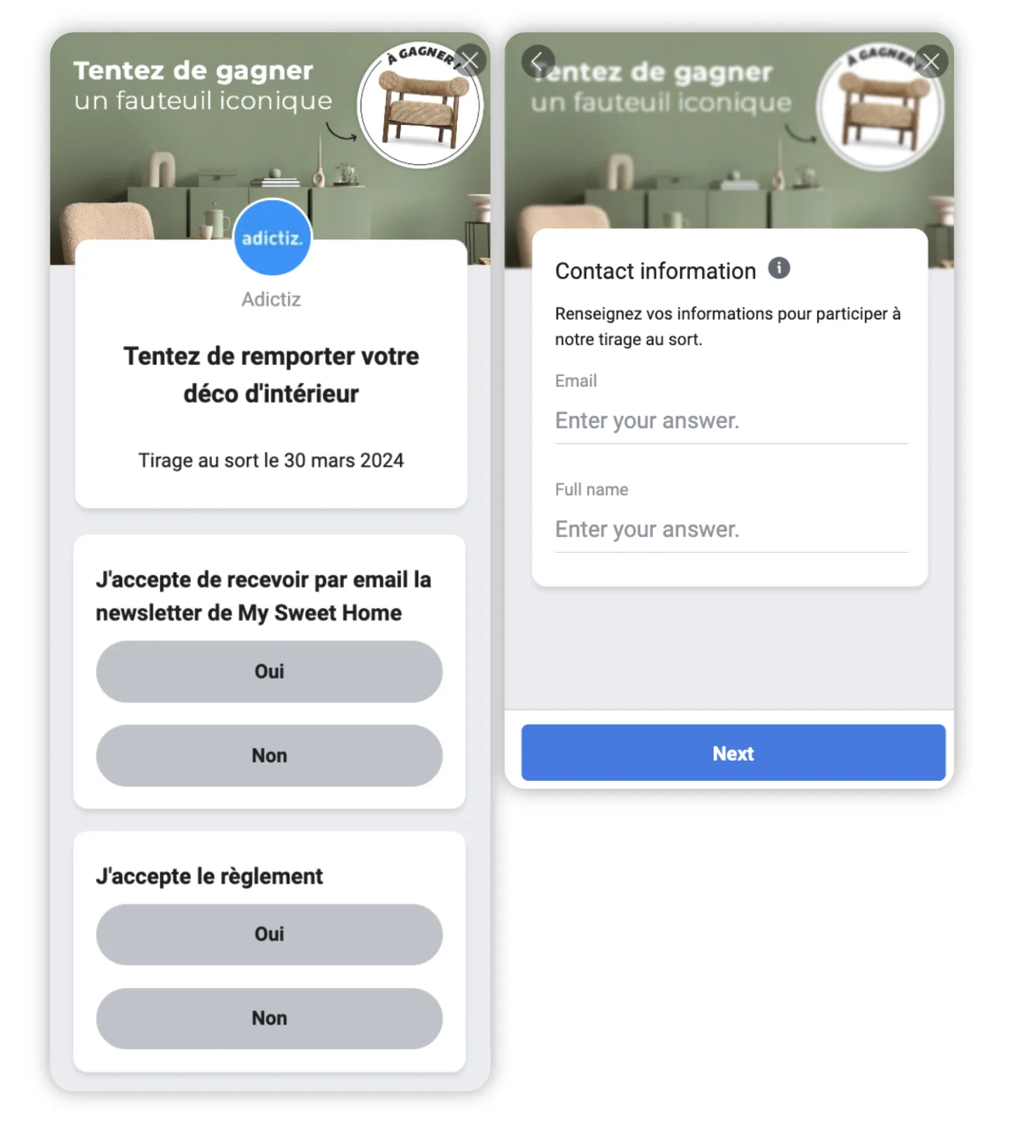
Le form lead (ou formulaire de prospection) permet de générer des leads en laissant les prospects soumettre leurs informations dans un formulaire intégré à une annonce publicitaire. 

Pourquoi l’utiliser : pour recruter et qualifier des visiteurs à l’aide d’un formulaire pré-rempli intégré à ses campagnes média. En plus de permettre de générer des leads, l’avantage de cette méthode de collecte réside dans sa rapidité. L’utilisateur ne quitte pas l’interface (réseau social, moteur de recherche etc.) puisque le formulaire est nativement intégré à la plateforme. Cela rend le remplissage du formulaire plus rapide et l’expérience plus rassurante pour le prospect. 

Quand l’utiliser : Les leads forms peuvent être partagés aux prospects de la marque à différents moments stratégiques comme lors d’une demande de devis ou de démonstration gratuite. Ou encore l’inscription à la newsletter ou à un évènement. 

Comment l’utiliser : Le form lead peut être configuré avec pré remplissage des données que l’utilisateur à rempli sur son profil (compte client ou profil sur les médias sociaux). Il est conseillé de diffuser un formulaire le plus court possible. Les champs sont entièrement personnalisables, ce qui permet à la marque de se concentrer sur les données qui sont pertinentes pour elle.

Weekly - form lead

3. Coresgistration

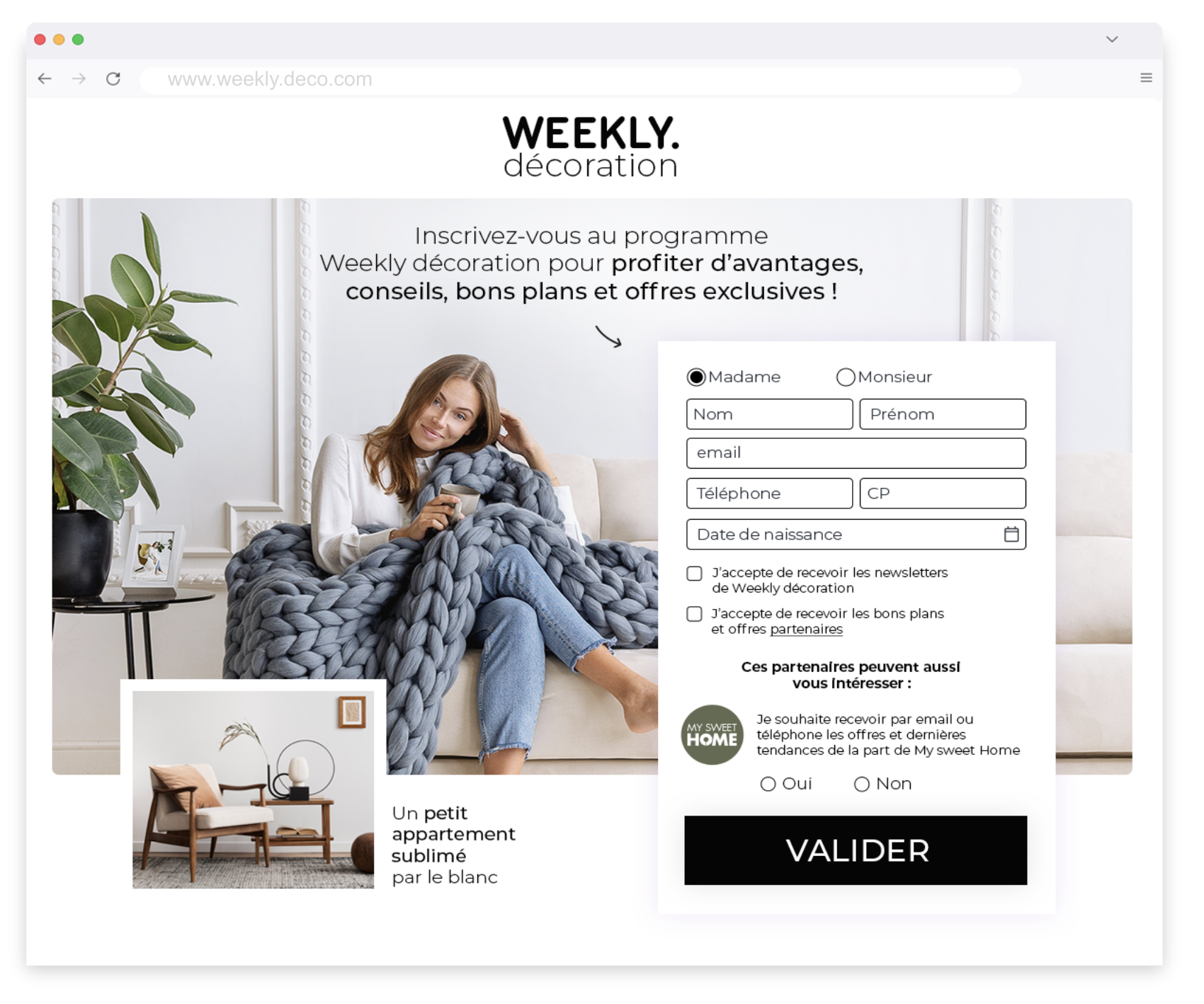
Also known as co-subscription, coregistration allows brands to take advantage of a user’s subscription to a newsletter or another form of subscription (for example, a monthly product box) to collect data or opt-in.

This method generally takes the form of an advertiser logo, a catchphrase and then a personalised check box. When users fill in their plan form, they can tick an additional opt-in box to subscribe to the partner brand’s mailing list.

Why use it: to recruit opt-in volumes via a partner campaign in order to benefit from its audience

How to use it: as with other collaborative marketing methods (such as cobranding), the key to coregistration is to target the right partner. The more closely the brand’s value proposition and positioning are aligned with that of the partner, the more likely customers will be to tick the co-subscription box.

weekly - data collection

4. Click-to-lead email to collect customer data

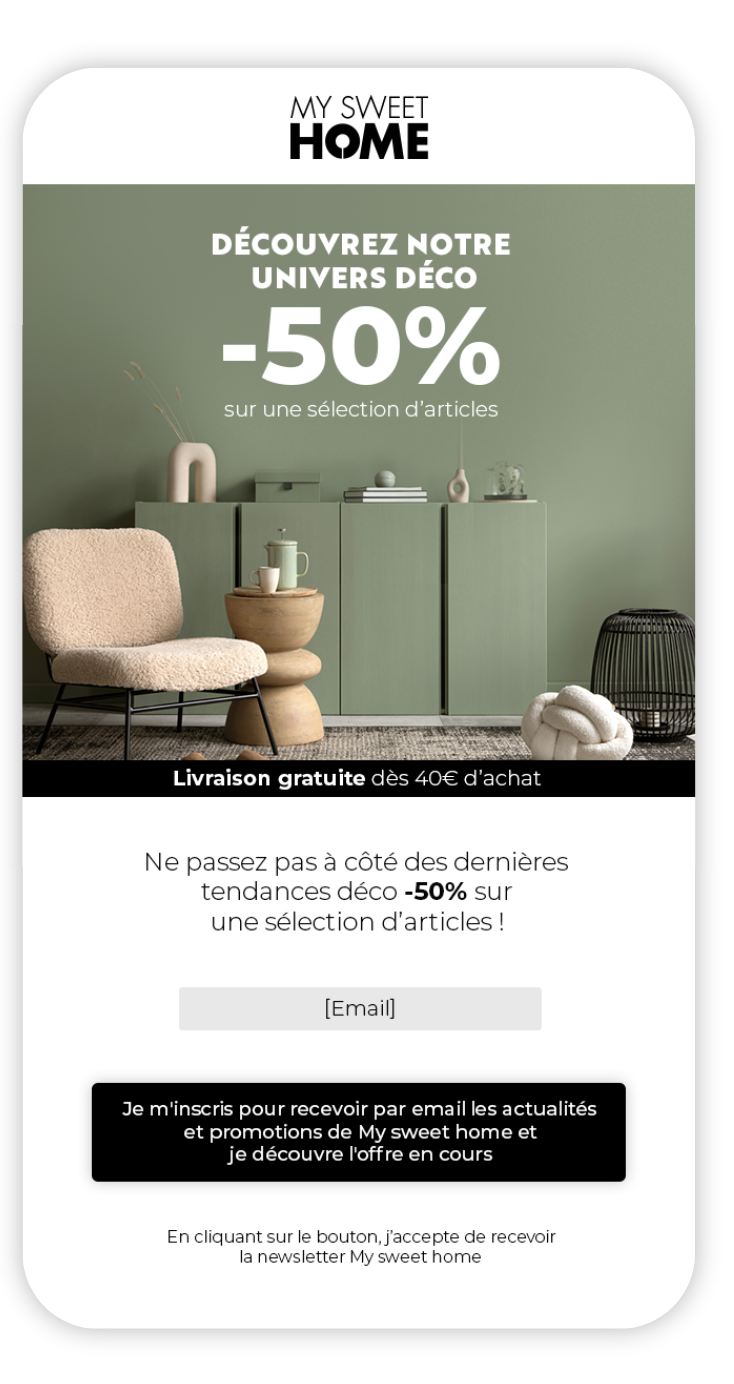
This data collection method consists of highlighting an offer to encourage users to sign up for the brand’s newsletter. The opt-in is generated by the click (click-lead), and the user is then redirected to the e-commerce site.

Why use it: to facilitate data collection and generate conversions, as part of a prospecting emailing campaign.

When to use it: as part of an email campaign to generate leads

How to use it: to encourage opt-ins generationThe offer highlighted in the campaign must be attractive. Adding a deadline for taking advantage of the offer can also create a sense of urgency that will encourage prospects to sign up for the newsletter or tick the opt-in box so that they don’t miss out on current promotions.

Weekly - clic to lead email

5. Comparators for recruiting highly qualified leads

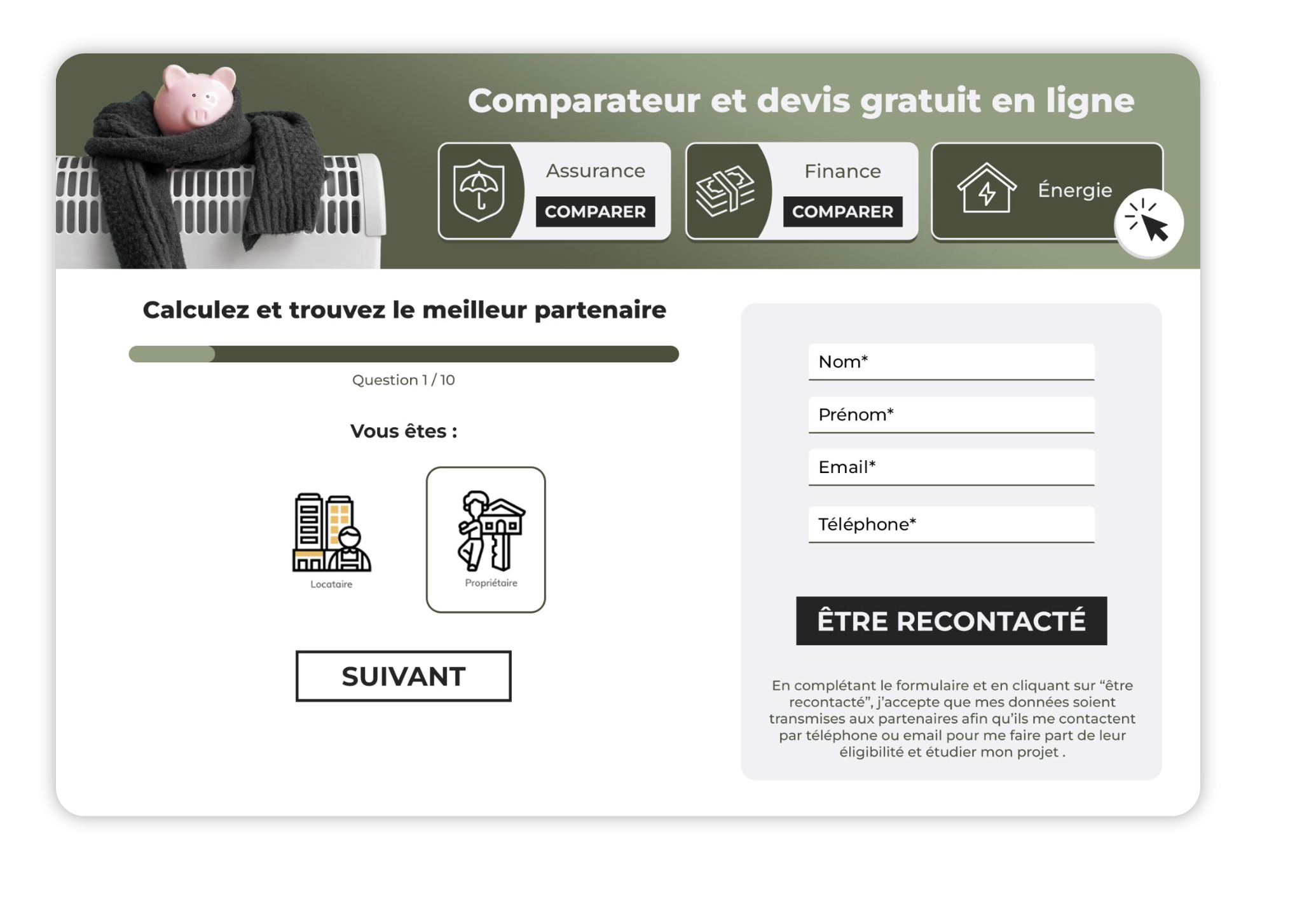
Finally, online comparators can be a lever for collecting customer data. The principle is simple: users want to find out more before buying a product or service by comparing different offers. They use a comparator and provide precise information in order to benefit from recommendations.

Why use it: to recruit ultra-qualified data and opt-ins.

When to use it: when a new prospect arrives on the comparator to understand their needs.

How to use it : the data collection form must meet the needs of the user (and not just the needs of the company, i.e. the data it wishes to obtain). The questions asked should be geared towards the user’s expectations and focus on a better understanding of their preferences. To encourage prospects to fill in the form, brands can offer targeted incentives (such as the possibility of being called back within X days by an advisor). The prospect can then be targeted with personalised offers.

Weekly - collection comparator

Conclusion

Are you looking for effective ways to collect qualified data and get to know your audience better through an engaging interactive experience? Discover our different data collection formats to increase interaction with your prospects and customers. You are also welcome to view our webinar on data collection.

In 30 minutes, we show you how to launch your own high-performance interactive marketing campaign

What is data collection? What methods are used?

What is data collection? What methods are used?

Collecting data is crucial for businesses. Organisations rely on data to optimise their day-to-day operations, facilitate strategic decision-making and better address their needs.

What’s more, to refine your knowledge of your business and your audience, it’s important to put in place a data collection strategy. In this article, we look at methods for collecting and qualifying customer data.

What do we mean by data collection?

Data collection is the process of extracting data from a source to gather information. Then, from the user’s point of view, it can be deployed with surveys, interviews and focus groups as part of market research.

Today, every point of contact is an opportunity for companies to gather valuable information. Browsing a website or application, visiting a shop and interacting on social networks are all opportunities to understand the behavior and expectations of audiences.

The qualification and analysis of this data can then be used to:

  • evaluate the company’s performance (in terms of customer satisfaction, conversion and retention);
  • make better decisions (sales, marketing, operational, etc);
  • predict future market trends and anticipate audience expectations.

The different types of data

Before looking at the different methods of data collection, we need to differentiate between the 3 main types of data.

  • First-party data, i.e. behavioural information collected when customers interact with their sites, applications, products or social networks.

  • Third-party data, collected by third parties, but the reliability, quality and ethical nature of this data is less than that of the previous types.

Why collect customer data?

First of all, when collecting data, you need to identify the reasons why the company wants to have the information. There are many reasons for collecting data (not all of which are mutually exclusive):

  • Enhancing your CRM database. These days, brands need to collect new qualified contacts in order to gather information about their customers. Feeding the CRM is an objective that enables key messages to be communicated. This is made possible by communication levers such as newsletters and SMS. It’s also an excellent way of refining customer knowledge and better addressing needs.

  • To compensate for the deletion of data (which occurs every 3 years). The RGPD stipulates that European authors (including companies) may retain their customer data for 3 years. It is therefore crucial for organisations to plan for data collection opportunities in order to renew their database on an ongoing basis.

The main data collection methods

Depending on the quality and nature of the data, the company can use different data collection methods:

  • Quantitative data collection, using systematic methods. This type of data is distinguished by its ability to provide a basis for statistical analysis of the company. It can be collected via surveys (with closed questions), behavioral observation (data observed on the website, etc.).

  • Qualitative data collection focuses on non-numerical data. This approach favors precision and depth over breadth by offering an insight into the preferences and motivations of its audience. In addition, it can be collected via open surveys and in-depth interviews (one-to-one or via focus groups, etc.).

  • Primary data collection refers to the capture of data that has not been processed beforehand. This is data collected at source (directly from prospects and customers) via forms, questionnaires or interviews.

  • Secondary data collection involves searching for and using data that has been collected for a purpose other than that of the company. This secondary data is often historical and provides a backdrop for new research. It is collected through archival research or database mining.

Gamified tools for collecting customer data

The golden rule of data collection is that the closer you are to the source of the data, the more qualitative, accurate and reliable it is.

Companies therefore need to mobilise tools to collect information from their prospects and customers. They can rely on gamified and interactive formats. These encourage their audience to share information freely and accurately. What’s more, this information can relate to their purchasing habits.

These gamified data collection tools include :

  • The marketing game, ideal for recruiting, engaging and converting. To take part in a competition, users first have to fill in a form. Then, the game mechanics can multiply the number of interactions with the user and the collection of first-party data.
Weekly - collection methods
  • The lead generation form. This tool enables you to recruit and qualify subscribers using a form integrated into the platforms. This is an excellent format for inviting Internet users to share their contact details.
Weekly - lead generation
  • Co-registration to recruit opt-ins. This format enables you to pool your recruitment efforts by associating your company with a complementary collection method (via a partner brand).
weekly - data collection
  • The click to lead email. The brand highlights an offer to encourage the user to subscribe to its newsletter and thus expand its customer database. The opt-in is generated by the click and the user is then redirected to the e-commerce site.
Weekly - email clic to lead

Conclusion

Implementing a data collection strategy is crucial if you are to make the right decisions and target your audience as effectively as possible. To meet today’s data collection challenges, your company needs to multiply its methods and tools so that it has a precise understanding of its market and its audience. Discover our gamified formats to help you recruit leads and share quality data!

In just 30 minutes, we’ll show you how to launch your own high-performance interactive marketing campaign.

Ouest France: how to attract new users through gamification

Ouest France: how to attract new users through gamification

Developing a mailing list and attract new users are key issues. Once subscriptions have been made and opt-in obtained, this audience can receive information about services or products.

There are several ways of encouraging prospects to register for a tool, service or platform. The collection of opt-ins and registration can be offered at different points in the marketing journey. By optimising this strategy, brands can expand their audience and hope to convert and retain a large number of customers.

Marketing highlights, when consumers are interested in brand content, are crucial moments. By creating effective campaigns, using techniques such as gamification, brands can collect enriched and reactivatable opt-ins.

In this article, we explore how to turn a branded event into an opportunity to attract new users. We will look at the notion of enriched opt-ins and how they can encourage the act of buying. To illustrate this, we’ll take the example of a campaign run by the Ouest France media.

Marketing challenges in the press sector

In the age of the Internet and social networks, the press media are faced with marketing and commercial challenges. It is becoming complicated for companies to maintain their financial health, given the competitors that have emerged. These include pure-play media (such as Mediapart), which have taken on the print media, as well as influencers and content creators. The latter represent an alternative to traditional media (among the younger generation).

Among the challenges facing the sector, the media point to the decline in advertising and their traditional sources of revenue. They have had to turn to new business models (the paywall, which consists of offering certain content free of charge to encourage visitors to take out a paying subscription).

Trust in information is a priority for the media. They cite the accuracy of the content (40%), being perceived as a trusted medium (23%), as well as audience development (17%) as the main issues they need to work on. The veracity of information and the reliability of sources are at the heart of their concerns, particularly in the face of the arrival of AI.

Attract new users to meet media challenges

To meet these challenges (standing out from the competition, converting readers, creating a bond of trust), the media are turning to attract new users and enriched optins (collecting preference data in addition to user consent).

By developing their mailing lists and subscriber bases, companies can build up an audience with which to communicate directly (via personalised emails). An audience can be nurtured (this is known as lead nurturing) to provide them with high value-added content. This may involve encouraging them to create an account or take out a paid subscription in exchange for benefits (exclusive offers).

The registration will create a link between the prospect and the media. It will enable the company to  achieve several objectives that are crucial to its growth:

  • Better understand your audience and collect their preferences (content categories and formats, preferred information channels). This data will enable the media to adapt its editorial line and offer personalised newsletters;
  • Reactivate users interested in the media by offering them incentives to create an account or even take out a paying subscription (discounts, goodies, etc.);
  • Generate visits by offering relevant content that encourages subscribers to visit the site. This increase in traffic will enable the company to negotiate advertising partnerships and generate greater revenue.

Gamify a special event to collect enriched opt-ins

Gamification is an effective way of collecting registrations and enriched optins. The interactive and playful nature of the game mechanics helps to attract and capture the attention of its target audience.

By offering a reward in return (discount, voucher, exclusive content), the media can easily encourage their audience to share their email and consent to the communication being sent.

This strategy is effective when it is implemented during a peak marketing period. Users are alert to the opportunities that brands can offer and are more inclined to make a purchase. The end-of-year festivities are a high-consumption period. A media audience will be looking for good deals to save on a subscription, for themselves or as a gift.

With an opt-in valid for 13 months, the media will be able to use gamification to re-engage their database (and collect new data).

The example of Ouest France

The Ouest France media chose to use gamification marketing to animate its audiences during the month of December. In fact, the aim of the campaign was to develop this audience.

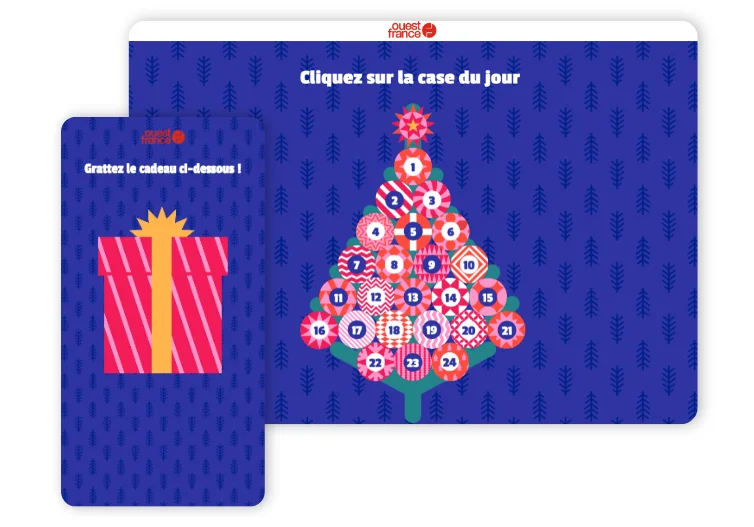
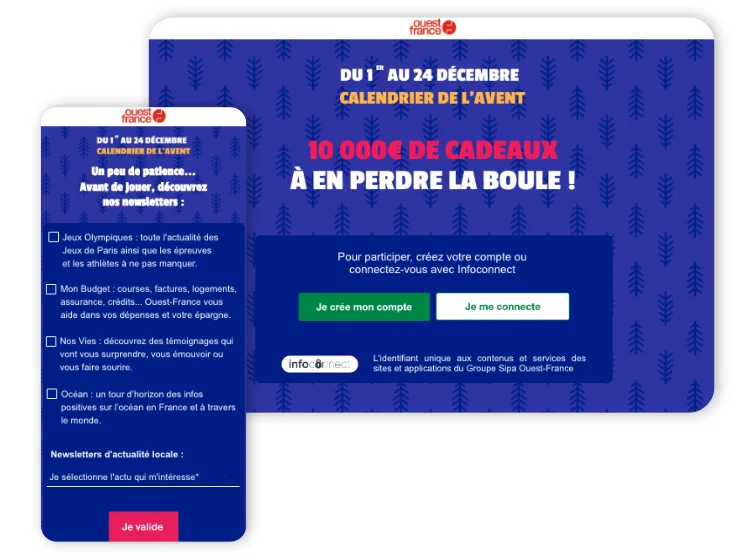
Participants in the operation had to create a Ouest France account to take part in the Advent Calendar. To reach a wide audience, the competition was broadcast on the newspaper’s website, on its app, in the press and via email campaigns.

Every day, from 1 to 24 December, Ouest France offered an animation in the form of boxes to be opened. After creating an account and filling in the collection form, participants could win attractive prizes such as a holiday, household and high-tech appliances, shopping vouchers, etc.

ouest france attract new users

The objective was more than achieved, since 25% of the participants in the operation came from the creation of a new account (i.e. 21,000 new accounts created via the operation).

Ouest France was able to capitalise on the engagement to collect enriched opt-ins on different themes (thematic preferences of future readers). The medium was then able to use this data to encourage subscriptions via targeted retargeting email campaigns.

ouest france opt-in collection

Conclusion

Gamification, particularly during a peak period in the marketing calendar, is an excellent strategy for attracting new subscribers and enriching your customer base. Discover
our marketing animation catalog and boost customer account creation!

In 30 minutes, we show you how to launch your own high-performance interactive marketing campaign

This site is registered on wpml.org as a development site. Switch to a production site key to remove this banner.